
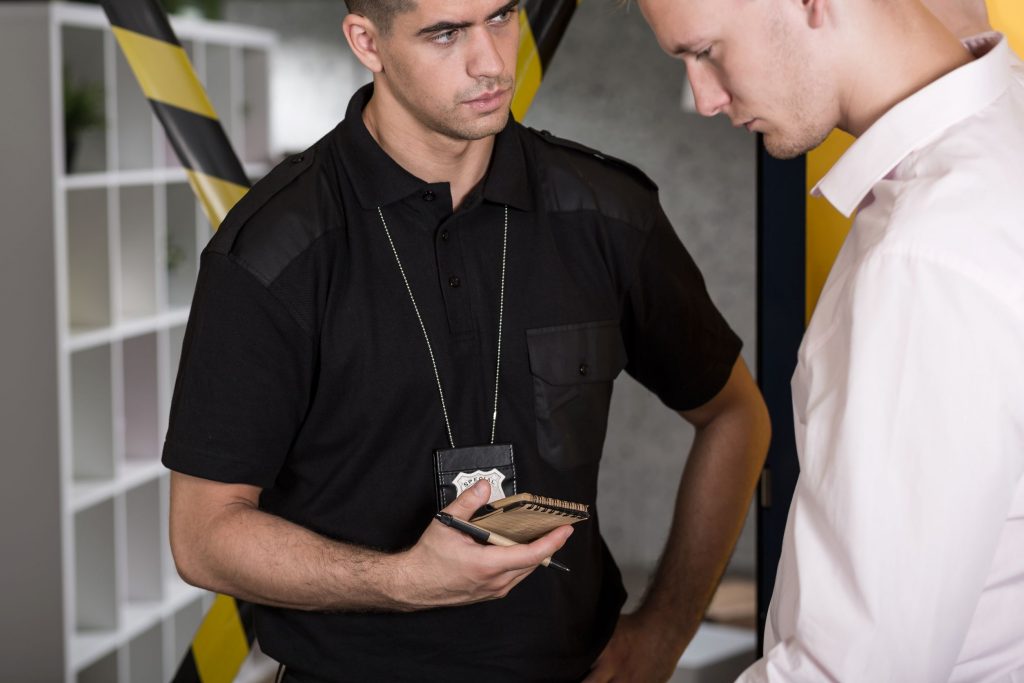
It seems that, in theory, we all know what NOT to say to the police, but when reality hits, sometimes logic goes out the door. Being contacted, questioned, or pulled over by law enforcement in Rogers County can be an incredibly stressful experience, especially if you realize you are the target of a criminal investigation. In these high-pressure moments, it is a natural human instinct to want to talk your way out of trouble, clear your name, or explain your side of the story.
However, from a criminal defense perspective, speaking extensively with investigators without legal representation is almost always a mistake. Under the U.S. Constitution and Oklahoma law, you have an absolute right to remain silent—and exercising that right is your strongest shield.
If you are a suspect in a crime, here is a list of what NOT to say to the Police when you are being questioned.
“I didn’t do it, but here is what actually happened…”
The moment you start giving a narrative or a timeline, you are providing the state with evidence. Even if your story is completely true, investigators are actively looking for inconsistencies, timeline errors, or casual admissions that link you to a crime scene or the individuals involved. Anything you say can and will be used against you by the Rogers County District Attorney’s Office. Let an attorney review the facts and present your defense at the proper time.
“I was there, but it wasn’t my fault / I didn’t know what they were doing.”
Trying to minimize your role or shift blame to a co-defendant frequently backfires. By admitting you were present or that you “had a feeling” something illegal was happening, you may have just confessed to being an accomplice, being at the scene of the crime, or possessing constructive knowledge of illegal activity. In Oklahoma, being an accessory or an aider and abettor carries severe legal consequences.
“Sure, you can look around. I have nothing to hide.”
Never consent to a search of your person, your vehicle, or your home. If an officer asks for permission to search, it usually means they do not have a warrant or enough probable cause to get one without your cooperation. Politely but firmly state, “I do not consent to any searches.” If they proceed to search anyway, do not physically resist, but let your defense lawyer challenge the legality of that search in court later.
“I guess I might need a lawyer, right?”
Vague, hesitant statements or hypothetical questions about wanting a lawyer are not legally binding on police. In Oklahoma, your request for legal counsel must be completely unequivocal. If you ask, “Do you think I need an attorney?” local detectives are legally allowed to ignore the question and keep interrogating you. You must state clearly and directly: “I am invoking my right to remain silent, and I want to speak to a lawyer.”
Anything that is explicitly untrue.
Lying to law enforcement is number one on the list of what NOT to say to the Police — whether providing a fake name, a fabricated alibi, or false information about an incident—is a separate criminal offense. It can lead to charges of obstructing an officer or compounding a crime. Furthermore, once it is proven that you lied, your credibility is destroyed, making it significantly harder for a defense attorney to protect you or negotiate a favorable outcome later.
“Off the record…” or “Just between us…”
There is no such thing as an “off the record” conversation with a police officer. Every statement you make, whether in the back of a squad car, in an interview room, or over a casual phone call, is recorded or noted. High-definition body cameras and dash cameras are standard equipment across local agencies, and everything captured on them is building the prosecution’s case file.
Navigating Rogers County Jurisdictions
Whether you are dealing with a routine traffic stop, a DUI checkpoint, or a felony investigation, different local agencies have distinct jurisdictions across our area. You could find yourself being questioned by:
- The Claremore Police Department: Handling municipal and state offenses within the city limits.
- The Rogers County Sheriff’s Office: Investigating crimes throughout the county’s rural roads and unincorporated communities.
- The Catoosa Police Department or Inola Police Department: Active traffic enforcement and local municipal investigations along major highway corridors like I-44 and Highway 412.
- The Oklahoma Highway Patrol (OHP): Frequently initiating stops and felony drug interdictions along local turnpikes and state highways.
Regardless of which agency badge is outside your window or across the interrogation table, your constitutional rights remain exactly the same.
The Only Things You Should Say
If you find yourself being questioned or detained as a suspect, keep your communication minimal, polite, and direct:
- Provide your basic identifying information (name, address, date of birth) if required.
- Clearly state: “I am choosing to remain silent, and I want my attorney present before answering any questions.”
- Stop talking immediately after invoking this right.
Why You Need Local Defense Advocacy
What NOT to Say to the Police while being questioned seems easy but isn’t always so simple. When you refuse to answer questions, law enforcement may use high-pressure tactics or imply that your silence makes you look guilty. Remember: exercising your constitutional rights can never legally be used against you as an admission of guilt.
At Kania Law Office – Claremore Attorneys, our criminal defense team knows exactly how local investigators build their cases. We step between you and law enforcement, ensuring your rights are fiercely protected from the moment you invoke them. If you or a loved one is being investigated or is currently held at the Rogers County Jail, do not wait to secure professional representation. For a free consultation, call us at 918-379-4872. You can also follow this link to ask a free online legal question.